A few weeks ago on the show, we talked about first-time buyers, the very start of the real estate life cycle. This week we flipped to the other end: downsizing and selling the family home. It is one of the most personal moves a family ever makes, and in my experience it is never just a transaction. Real estate runs on life cycles, and when someone has raised their kids in a house or run a ranch for generations, the decision to sell carries as much emotion as math. Here is how I walk families through it.
Key Takeaways
Downsizing is both emotional and practical, so the plan must start with your real goals and the reasons behind the move. Get clear early on who can actually sell, especially when a home sits in a trust or estate, and bring in the right legal and tax help. And remember, downsizing is usually two transactions at once: a sale and a purchase, with exemptions and taxes that are easy to overlook.
Why is selling later in life so different?

It runs the gamut. I have worked with people who raised their kids in a home and feel every bit of that history, and families with multi-generational ranches who carry a deep legacy connection to the land. Often they reach a point where it is simply not feasible to keep it, or they just cannot physically manage the property anymore. The kids love going back to the ranch, but they do not want to work it. None of that is a math problem. It is life. My own parents had a couple of acres they loved, and they went through every emotion about leaving before they downsized to a garden home. Once they set it up the way they wanted, they told me it was one of the best decisions they ever made. They fought it for a while, loved their time there, and are happy where they are now. That is the arc I see again and again.
How do you handle the emotional side without losing the plan?
By being frank, and by doing the hard work up front. If you qualify well at the beginning, you understand not just the goals but the reasons behind them. Then when you hit an emotional snag in the middle, and you will, you lead people back to those goals. I remind them that yes, there are a lot of memories in this house, and they can make new ones in the next one, and the reason they started down this road has not changed. I will be honest, no matter how well you qualify, things still pop up. I once lost a deal at the finish line because the family couldn’t agree on who would get grandma’s rocking chair. I never saw that one coming. But the better your foundation, the more of those moments you can work through instead of watching the deal fall apart.
What if it is a family decision, not just mom and dad’s?
Then you really have two parties: one that wants to get it done and one that may not, and your job is to identify everyone involved at the very beginning. You want all the cards on the table at the start so you can spot the blind spots before they derail you. We do farm and ranch work too, and a few years ago I worked a ranch sale with 19 people in the decision. My hair was darker when that one started. Real estate has a lot of psychology because it is personal. This is also exactly why estate planning matters so much. Families assume everyone will get along, and then emotions and old history take over. Whether it is a multi-million-dollar ranch or a modest house, good estate planning puts your wishes in writing so your family is not left to fight it out.
Who is actually allowed to sell the home?
People skip this step, and it can stop a sale cold. No matter how the property is held, you need to understand the legal structure and who the signing and responsible parties are. A home in a trust is different from one passing through an estate, and title will vet who can actually sell before anything closes. I am a big believer in staying inside my lane, so when it calls for it I bring in your attorney, your CPA, or a title professional. Recently, a situation came up where a son tried to sell his mother’s property without her even knowing. It surfaced during the process, and the answer was simple: he didn’t own it. Confirming who can legally sell, and who even belongs in the conversation, is foundational.
What costly mistakes do people make?
The biggest is not getting good representation, someone who understands your goals and is willing to say no or, “We need to structure this differently.” The second is letting an agent operate outside their expertise. When something is beyond my scope, like the fine print of a trust, I say so, and we bring in a family or real estate attorney. I always put it this way: I do not look good in orange. The goal is never to force a deal through, it is to achieve your goals and leave you in a better position than when we started.
Why is downsizing really two transactions?
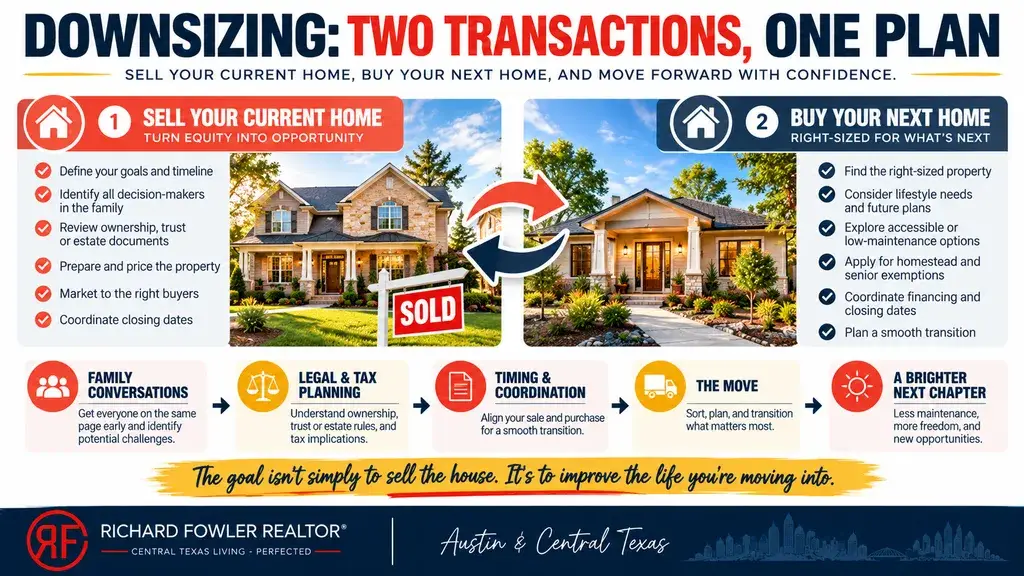
Because it is usually a sale and a purchase at the same time, and you need someone who can navigate both sides of that coin. Exemptions and tax ramifications are easy to miss. When you move, make sure you carry your homestead exemption to the new place, and your senior exemption if you qualify, or you can end up with a surprise bill. This is also happening against a huge backdrop. Cerulli Associates estimates that roughly $124 trillion in wealth will change hands through 2048, with about $105 trillion going to heirs, as an aging generation of homeowners passes down homes and savings. Much of that wealth is tied up in homes, so many families are about to face downsizing and transfer decisions. Having real expertise in your corner helps you make those moves well.
A few questions I hear all the time
Is downsizing a good idea later in life? It can be a great one. Many of my clients free up equity, lower their maintenance, and gain the freedom to travel or to help their kids. The key is being clear about your goals first.
Who can sell a home that is in a trust or estate? It depends on the legal setup. The trustee or executor and the named responsible parties typically sign, and title will confirm who is authorized before closing.
Do I lose my homestead exemption when I move? Not if you transfer it. Make sure you file your homestead exemption and, if you qualify, a senior exemption on the new property.
Should I downsize and buy at the same time? Often, you do both at once. Work with someone who can coordinate the sale and the purchase so the timing and the money line up.
The Bottom Line
Downsizing is not just about getting a smaller house. It is about honoring what a home meant while making a clear-eyed move toward what is next. Start with your real goals, get the right legal and tax help in place, and work with someone who will tell you the truth. If you or your parents are starting to think about this chapter in Central Texas, reach out. A call or an email is all it takes, and I am glad to help you think it through.
Written by Richard Fowler, REALTOR with the ARK Property Team at Pure Realty. Published October 28, 2026. Last updated October 28, 2026.