
Every quarter, my friend Jeff Kikel and I sit down to compare notes — him from the financial and investing side, me from the boots-on-the-ground real estate side here in Central Texas. We just wrapped our latest market update, and honestly, it’s one of the more interesting conversations we’ve had in a while. A lot has shifted, and there’s a real opportunity hiding in the headlines if you know where to look in this buyer’s market.
Here’s my take on where we are and what it means, whether you’re thinking about buying, selling, or just trying to make sense of the noise.
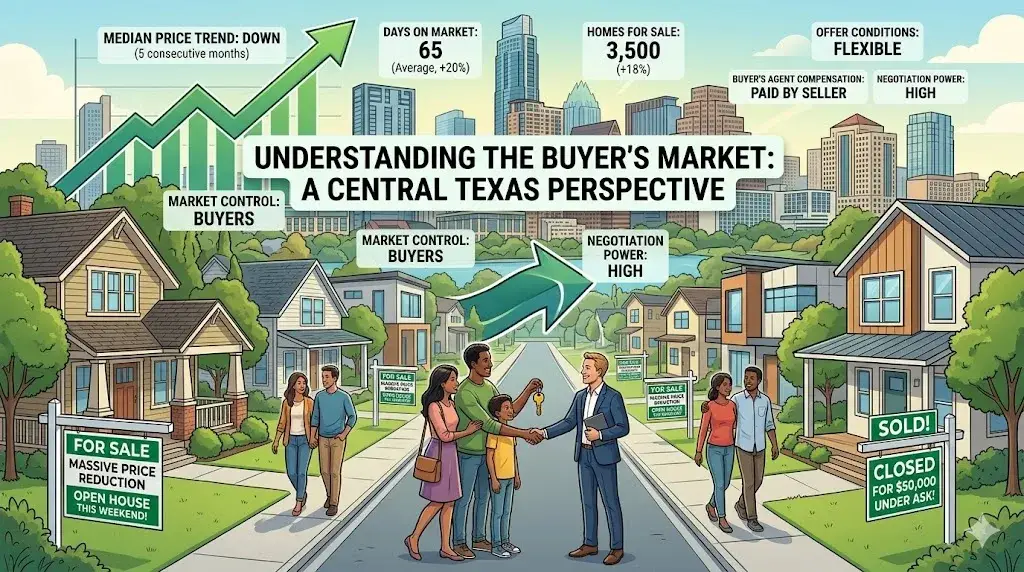
The Market Has Shifted Toward a Buyer’s Market
If you’ve felt like the frenzy of the pandemic years is over, you’re right. We’ve come down off those highs over the last several years, and the numbers tell the story. The median home price in our area peaked back in 2022, somewhere between $550,000 and $600,000. By the middle of 2025, that had settled into the $430,000 to $470,000 range.
That’s a meaningful shift, and it’s created something we haven’t seen in a long time: a genuine buyer’s market. There’s a lot of inventory out there right now. In fact, roughly half the homes currently on the market in Central Texas have already taken at least one price reduction.
For buyers who are in a position to move, that’s a real window. For sellers, it just means we have to be smart and realistic — more on that below.
Let’s Talk About the “Affordability” Myth
I hear it constantly, especially from younger buyers: “It’s just unaffordable.” And I get it — rates are higher than they were, and prices feel steep. But a lot of the time, what people really mean is they want the perfect house, fully updated, move-in ready, ideally brand new.
Jeff told a great story on the show about the first home he and his wife bought. They ripped the entire kitchen out the day they got the keys and washed their pots in the front yard with a garden hose for six weeks while a new one got built. The point isn’t that everyone should do that — it’s that the deals are out there if you’re willing to look at properties that need a little work.
When Jeff and I actually pulled listings under $300,000 recently, there were plenty of them. They might not be the dream home on day one, but they’re a way into the market.
One honest word of caution, though: watching six episodes of HGTV doesn’t make you a contractor. I’ve walked through homes with clients who swear a project is “just a weekend.” Then I ask the real questions — do you have experience with this, and you’re already working 80 hours a week, so when does this actually get done? That “one weekend” can turn into six months or a year. Be realistic about what you can take on.
Rates, the Fed, and the “Lock-In” Effect
Mortgage rates have been on a roller coaster. We touched 8% a couple of years ago, dipped under 6% last year (which had everyone excited about a big spring), then bounced back up. Right now we’re hovering somewhere in the 6.1% to 6.5% range depending on who you’re working with.
That’s created what we call the lock-in effect. A lot of homeowners are sitting on a 2% or 3% rate and can’t stomach the idea of trading it for something double that. I understand the hesitation. But here’s the reality: those ultra-low rates were never normal. Historically, 5% to 6% is the normal range. We just got spoiled.
One thing Jeff explained really well: the Federal Reserve doesn’t actually set your mortgage rate. The Fed controls short-term overnight rates. Mortgage rates track more closely with the longer-term bond market and what investors expect down the road. .That’s why you’ll sometimes see rates stay flat — or even tick up — right after the Fed cuts. So don’t bank on a Fed announcement to magically lower your payment.
Check out this recent episode of Jeff’s Youtube show The Cents of Things where Jeff and his co-host discuss the current economy here.
It All Comes Back to Your “Why”
This is the question I ask every client wrestling with whether to make a move: why?
If your why isn’t big enough to overcome the rate, you’re probably not really in the market yet — and that’s okay. But when the why is real — you need a bigger house as your family grows, you’re ready to downsize now that the kids are gone, your job is relocating, you want to be downtown — then life doesn’t wait for the perfect rate. If you have to move, you move. And historically, if you buy real estate and don’t sell into a down market, you do well over time. People will always need a place to live.
If You’re Buying: Don’t Sleep on New Construction
Builders are competing hard right now. Across the board, I’m seeing lower prices plus incentives stacked on top — rate buydowns, prepaid HOA dues, even extras like blinds and a washer and dryer thrown in. If you can overcome the interest rate, whether through a buydown or by bringing cash, this is a great time to get into the market. It really comes down to your specific situation and what you’re able to do.
If You’re Selling: Price It Right and Prep It Right
We are not living in pandemic days anymore, and pricing your home like we are is the fastest way to watch it sit. The first thing I do with sellers is give them a realistic range based on data — not my opinion, not their hopes, the actual numbers. If we’re far apart, I’ll often recommend a pre-listing appraisal. I had clients last year convinced their home was worth $75,000 more than I suggested; the appraisal came in close to my number. That $300–$400 appraisal saved them from a costly mistake, because if you price wrong and your home sits, it always costs you more in the end.
After pricing comes prep. With this much inventory, we have to set your property apart and get it as move-in ready as possible — landscaping, paint, carpet, roof, whatever it needs. But every recommendation I make is about return on investment. I’m not going to have you spend money to make someone else’s future house nicer; I’m going to focus on what actually helps it sell. We define your budget first, then work within it. One thing I I always recommend is a pre-inspection like we discuss in this article.
And timing matters. The prime window to list in the spring market is roughly April 15th through April 19th. Some clients go a little earlier to get ahead of the curve, some a little later — but that’s the sweet spot to aim for.
One more piece of free advice: if you want to improve your home, do it while you’re still living there so you can enjoy it, rather than writing a check so the next owner can.
The Bottom Line
On the financial side, Jeff is optimistic — he’s expecting a solid second half and wouldn’t be surprised to see double-digit gains on the S&P 500 by year-end, barring something we can’t control. His advice: tune out the media’s two-hour attention span, keep some cash available, and look for opportunities when the market dips. Or, as he likes to remind folks, take some of those gains and put them into real estate — which is where I come in.
From my chair, the headline is simple. If you’re a buyer with the means, this is one of the better windows we’ve had in years. If you’re a seller, success comes down to a realistic price, smart prep, and good timing. And on either side of the deal, the most important thing you can have is a good agent and a good loan officer who actually understands this market. One thing to do is keep a watch list of possible options, even the ones that might have been on the market for a while like we talk about in this article.
That’s exactly what I’m here for. Whether you’re upsizing as your family grows, exploring an investment property, or just want a real estate gut check on a decision down the road, give me a call. You don’t have to be in the market today — call me when a question comes up and we’ll talk it through.
Watch the full quarterly market update with Jeff Kikel on YouTube: https://youtu.be/PscdDJCy7fI
Richard Fowler is a residential Realtor with Compass (formerly Realty Austin) with over 15 years of experience helping seasoned professionals upsize, investors build portfolios, and buyers and sellers navigate the Central Texas, Farm & Ranch, and commercial markets.