Part of a new series of weekly conversations between Richard and Jeff Kikel, Chief Investment Officer of Freedom Day Wealth Management LLC.
▶WATCH THE FULL VIDEO:
If you own a home in Texas, or you’re thinking about buying one, you need to know about the homeowners’ exemption. This isn’t just paperwork. It’s real money you could be saving every year. I sat down with Austin-area Realtor Richard Fowler to break down how it works and what it could mean for your tax bill.
The homeowners exemption is an important benefit for homeowners in Texas.
Whether you’re buying your first place, you’ve owned your home for years, or you’re a senior, this is for you. Here’s what you need to know.
Understanding the Homeowners Exemption Benefits
The homestead exemption is a tax break for people who own and actually live in their main home in Texas. When you file, you’re telling the appraisal district, ‘This is my home. I live here.’ In return, the state knocks down the taxable value of your property.
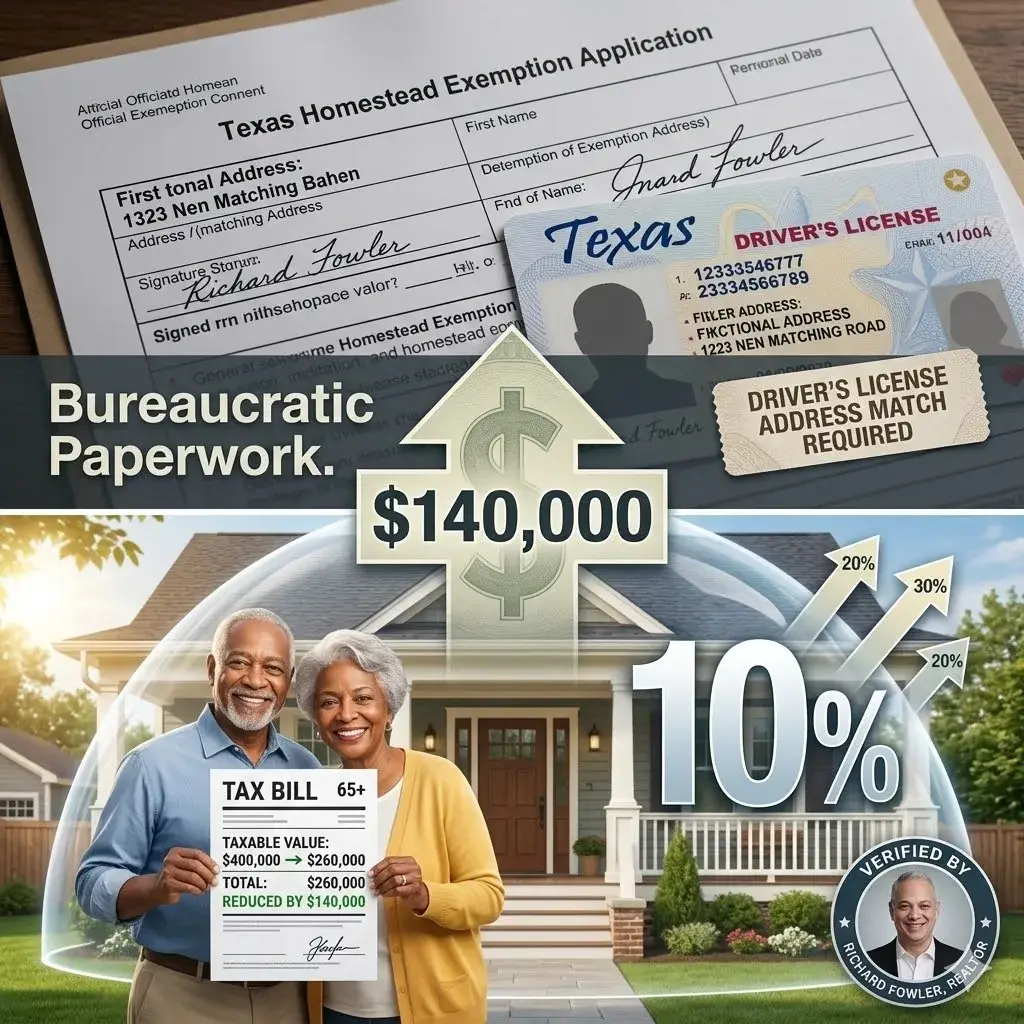
Here’s the big change: In November 2023, the standard homestead exemption went up. Now you can take $140,000 off your home’s assessed value before taxes. That’s a big jump, and it applies to every taxing entity—county, city, school, and more. (Patrick, 2025)
“Whatever your property value is, you can exclude $140,000 now. Pretty big chunk.” — Richard Fowler
If your home is valued at $400,000 for taxes, you’re only getting taxed on $260,000. (Texas Property Tax Law Changes: 2023-2026 Complete Guide, 2024) That adds up fast.
Even Bigger Savings: Over 65, Disabled, or a Veteran?
The standard exemption is good, but if you fit into one of these groups, you can save even more:
- Over 65: An additional $60,000 exemption on top of the base — bringing your total to $200,000.
- Disability: Also qualifies for that additional $60,000 exemption.
- Veterans: The exemption amount varies depending on your disability rating level.
To put it in perspective, the average home in Austin is worth about $450,000 to $500,000. (Austin, TX Housing Market: 2026 Home Prices & Trends | Zillow, 2026) If you’re over 65 and get the $200,000 exemption, you’re cutting almost half your home’s taxable value every year.
And there’s another big perk if you’re 65 or older. Your school district taxes get locked in at the rate they were when you turned 65. Since school taxes are usually the biggest part of a Texas property tax bill, this is a huge deal if you’re on a fixed income. (Property Tax Cuts as Large as Texas, 2023) The 10% Cap: Your Shield Against Skyrocketing Values
Even if your home’s value shoots up, once you have the homestead exemption, the appraisal district can’t raise your taxable value by more than 10% a year. Richard saw this firsthand during the real estate frenzy:
“We had houses that were appreciating 20, 30, 40% year over year. People who didn’t have their homestead exemption in place were getting hit with those increases year after year.”
If you didn’t have your exemption in place, there was no second chance. Your taxes went up right along with the market. Richard got a ton of calls from people wondering why their tax bills had jumped. The answer was almost always the same: no homestead exemption.
Bottom line: File your exemption as soon as you can. Don’t risk losing that protection.

How and When to File
Good news: Filing is easier now. You used to have to wait until January 1 after buying, then file between January and April. Now, you can file almost right after you close.
First, make sure you’re actually living in the home as your main place.
- Next, update your driver’s license with your new address.
- Then, grab your home purchase paperwork. You’ll need it when you apply.
Heads up: Your license address has to match your home. Plan your DMV trip early.
One more thing: The homestead exemption is tied to who legally owns the property. Richard found this out the hard way when he moved his own home into a trust and lost his exemption. He caught it after about 18 months, so he was able to get some of it back, but only because he caught it in time.
If you moved your home’s title to a trust or LLC, double-check your exemption. Mistakes here can cost you, but acting fast can help.
What Buyers Need to Watch For
If you’re house hunting and looking at the tax bill in the MLS, slow down. That number might not be what you end up paying.
Here’s why: The current owners might have extra exemptions, like being over 65 or having a disability. Those don’t transfer to you. Once you buy, those drop off, and your tax bill could jump. (Texas Property Tax Exemptions, 2023)
A good Realtor will always check how many exemptions a property has so you don’t get surprised later.
A Bonus Topic: Reverse Mortgages as a Planning Tool
We didn’t just talk about homestead exemptions. Richard and his co-host also brought up something important for homeowners 62 and up: reverse mortgages.
Reverse mortgages get a bad rap, and sometimes for good reason. They’ve been misused or misrepresented in the past. But if you use them correctly, they can be a powerful tool. You can tap into your home equity without making monthly payments. You stay in your home, and the loan balance grows over time. It gets paid off when you sell, move out, or pass away, and any leftover equity goes to your heirs.
Think of it as a lifeboat. Setting up a reverse mortgage can give you peace of mind down the road, not just quick cash now.
Here’s another example Richard shared. He had a client in their 50s, heading into retirement, with a $ 2,500-a-month mortgage. They set up a reverse mortgage in advance, wiped out that payment, and used the extra cash to pay for their grandkids’ college. Four years later, the college bills were gone, and they basically gave themselves a $2,500 a month raise.
Main thing to remember: Don’t go it alone. Talk to your Realtor, CPA, and a reverse mortgage expert before making any moves.
The Bottom Line: Don’t Wait to Get This in Place
Bottom line: File your homestead exemption now. Don’t leave money on the table.
Here’s a quick action checklist:
- File your homestead exemption right after you buy.
- Update your driver’s license with your new address as soon as you can.
- If you’re over 65, disabled, or a veteran, make sure to file for your extra exemptions.
- If you just moved your property into a trust, check your exemption status right away.
- If you’re buying, always check what exemptions the current owners have and how losing them will change your taxes.
- If retirement is coming up, talk to a financial planner about whether a reverse mortgage fits your plan.
And as always, if you have questions about how this all applies to you, talk to a local expert. Richard Fowler is an Austin-area Realtor who has helped people with these exact issues for years. You can reach him at richardfowlerrealtor.com.
Have questions about buying, selling, or managing your property taxes in the Austin area? Richard Fowler is here to help.
📍 www.richardfowlerrealtor.com