
And why every homeowner should know what their neighbor’s house actually sold for
I opened my mailbox and pulled out an envelope stamped with the county seal—a property tax appraisal notice. One glance at the new assessed value, and my stomach dropped. How could it have jumped so much in a single year? This experience led me to consider protesting property taxes. The necessity of protesting property taxes became clear to me as I realized how critical it is for homeowners to be proactive.
Comps affect offers, appraisals, and negotiations when you buy or sell a home. However, many homeowners don’t realize that comps also shape their yearly property taxes, and the county doesn’t always get them right.
The influence of comps on property tax assessments emphasizes the importance of protesting property taxes.
Understanding the importance of property values is crucial, especially when protesting property taxes.
Moreover, protesting property taxes can significantly affect your finances, and understanding the process is vital for every homeowner.
That year, the frustration finally tipped me from feeling powerless to being ready for action. I decided to stop paying for a tax protest service and handle my protest on my own. I used AI and, just as importantly, teamed up with my realtor, Richard Fowler, who had access to real MLS data. Here’s what I did and what I might do differently next time.
Why Protesting Property Taxes Matters
The act of protesting property taxes gave me control over my financial future.
In conclusion, embracing the process of protesting property taxes can lead to long-term savings and allow homeowners to feel more in control of their property assessments.
Protesting Property Taxes: Taking Control of Your Assessment
During the two years before 2025, I paid $70 to $80 per year to tax protest services to challenge my property tax assessment. However, I realized that understanding how to effectively protest property taxes could save more money. Altogether, I saved about $170 after spending roughly $150 in fees.
Then the county increased every property on my street by the maximum 10% for 2025. That was the last straw for me. I chose not to spend more on a service that wasn’t helping, and decided to handle it myself this time.
Using AI as a Research Assistant
“I want to protest my property tax valuation. What information do you need from me to help build the strongest case for protesting property taxes?”
I had been trying out Grok 3, the AI model from xAI, and found it was great for organizing complex research. It wasn’t fancy, but it did exactly what I needed. I started with a simple prompt:
“I want to protest my property tax valuation. What information do you need from me to help build the strongest case?”
Grok asked for three things: the county’s comps, my property’s appraisal card, and my hearing date—almost like the checklist you’d get from a seasoned realtor or protest specialist. But unlike a static checklist, Grok organized this information and generated a tailored strategy for my specific case. What surprised me most was that it told me to stop thinking like a seller and start thinking like a buyer.
Thinking Like a Buyer (Not a Proud Homeowner)
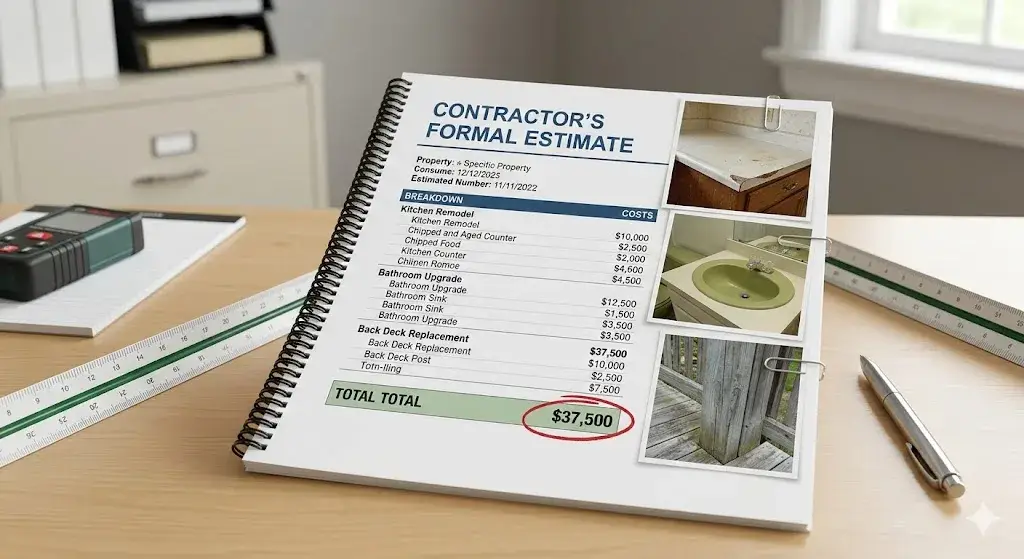
Every good realtor knows that a home’s condition affects its market value, regardless of what the county says. In real estate jargon, these are called “condition adjustments” or sometimes “functional obsolescence”. That just means if your home has outdated features or big repair needs compared to others, buyers will lower their offers. Counties may overlook this in their assessment, but buyers and appraisers do not. When I looked at my property through a buyer’s eyes, here’s what I noticed:
- Kitchen countertops and appliances that needed replacing
- A bathroom overdue for a full remodel
- A back deck that didn’t meet code. Built in 2003, it was definitely showing its age.
Through my experience of protesting property taxes, I learned valuable lessons about the assessment process.
I realized that protesting property taxes could be a gateway to significant savings, as any smart buyer would factor in necessary repairs when making an offer.
Protesting property taxes can lead to fairer assessments and ultimately lower tax bills.
A contractor estimated it would cost $37,500 to bring my home up to the same condition as the county’s comparison properties. That’s a big number, and any smart buyer would factor it in when making an offer.
The County’s Flawed Comp (And Why It Matters)
This is where understanding comps really pays off. Grok looked at the county’s comparable sales and quickly spotted that one property was priced $170,000 higher than mine. That single outlier was raising the average.
Realtors see this in appraisals all the time: one bad comp can throw off the whole valuation. I wrote a short rebuttal explaining why that property shouldn’t count in my assessment. The county appraiser agreed and took it out.
Why MLS Data Beats the AI’s Web Scraping
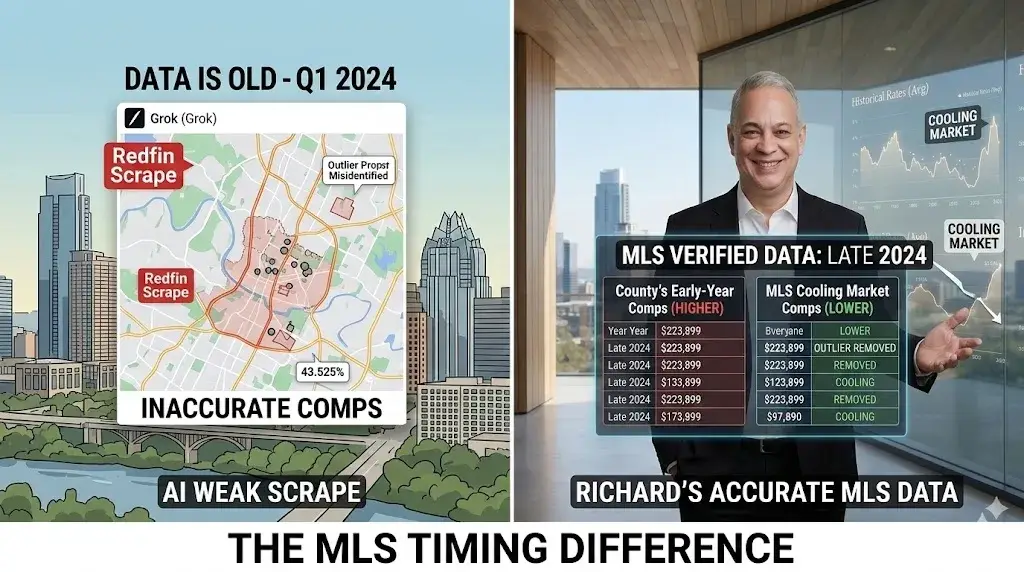
Grok also tried to find comparable sales from Redfin, but the results weren’t reliable. The values were off, the properties didn’t match, and the data was old. That’s why homeowners need a realtor for this process.
I reached out to Richard who got accurate, up-to-date comps straight from the MLS. His data was from late 2024, when the market had cooled, while the county’s comps were from earlier in the year, when prices were higher. That timing difference made it obvious: the market had changed, but my assessment hadn’t.
If you own a home, don’t underestimate the value of working with an agent who can get that data for you. It was the difference between a weak case and a strong one.
What I Brought to the Hearing
I built my case around what I call the “5-Part Protest Packet.” This simple template made my arguments clear and gave the appraiser everything needed to see the facts. If you want to replicate my approach, here’s the structure you can follow verbatim:
1. County comps, with a written explanation of any outlier or mismatch
- 2. Current MLS comps from your realtor, with full details
- 3. Photos of every major flaw and area needing repairs
- 4. Contractor’s written estimate for repairs and upgrades
- 5. A clear summary sheet showing your proposed fair valuation
I organized everything in a Google Doc and printed five copies. You never know when you’ll end up in a formal hearing room with the full Appraisal Review Board.
I organized everything in a Google Doc and printed five copies. You never know when you’ll end up in a formal hearing room with the full Appraisal Review Board.
The Hearing
I met with a county appraiser for a 15-minute informal hearing and walked her through my case from start to finish. I kept calm, explained everything clearly, and had documents to back up each point. There was a moment when I showed her the contractor’s estimate for $37,500 in repairs, alongside a photo of my outdated kitchen right next to the county’s glossy comp. She stopped flipping through my packet, looked up, and said, “So you’re saying the county’s comps are all from homes with recent upgrades, but yours needs major work?” I nodded and explained, “Yes, and that’s a real cost any buyer would subtract before making an offer.” I could see her reassess the numbers right then. That visible pause told me my strongest data had landed.
Ultimately, I learned that protesting property taxes is an essential step for homeowners.
Successfully protesting property taxes can yield substantial financial benefits.
At the end, she said: “Thank you. This is one of the most thorough and well-prepared protest packages I’ve seen.”
The Outcome: $46,000 Off My Assessed Value
Understanding the importance of protesting property taxes can empower more homeowners to take action.
I ended up with a $46,000 reduction in my assessed value, which saved me about $1,400 in taxes for 2024. Even better, that lower value is now my starting point for the next assessment cycle, so I’ll keep saving every year. Over the next five years, that single protest could add up to more than $7,000 in total tax savings, assuming tax rates and values hold steady. The bottom line: acting today is not just a one-year victory, but a long-term protection for your wallet.
What Made the Difference
- To make results easier to remember and apply, I use the “DATA” approach—the four critical factors that made my protest successful:
- D: Documentation. I built a clear, well-organized protest packet that uses logic and evidence rather than emotion.
- A: Accurate comps. I relied on current, real MLS data from my trusted realtor rather than web estimates.
- T: Timing. I paid close attention to the dates of my comps and made sure late-year sales in a cooling market were front and center.
- A: Attitude. An honest, buyer’s-eye assessment of my home’s condition, backed with photos and contractor estimates, made all the difference (something protest services never even asked for).
- Following the DATA system kept me focused on what mattered at every step.
Advice for Any Homeowner Considering a Protest
- Use AI to organize your research and argument—not to generate your comps.
- Here’s a quick first step you can take tonight: pull up your latest property appraisal notice or log in to your county’s appraisal district website to get your property’s details. Having your appraisal card handy is the foundation for everything that follows.
- Work with a realtor to get real MLS data—Zillow and Redfin won’t cut it.
- Pay attention to timing—late-year comps in a cooling market can be your best evidence.
- Document every flaw, and back it up with contractor estimates.
- Know your target number, and know when to escalate to a formal ARB hearing.
- Routinely verify AI’s math—it can be inconsistent.
You don’t need a third-party protest service to succeed. What really matters is having reliable data, honest documentation, and a clear, persuasive case. With help from a knowledgeable realtor and tools like AI to organize your evidence, you can take control of your assessment process and protect one of your most valuable assets. Stand up for your interests and remember, the right approach can make a difference year after year. You have the tools and the know-how to handle this yourself. Taking the initiative in protesting property taxes helps safeguard your financial interests. Trust your preparation and remember: you can absolutely do this.
About the Author
Jeff Kikel is a financial advisor who has personally helped homeowners reduce their property tax bills using practical data-driven strategies. If you’re looking for tested tactics that work in the real world, you can connect with Jeff at www.SureHorizonRetirement.com.